

Rodrigo Silva
Country Manager Switzerland & France
Phone
E-mail
The LE80 Radio Receiver is a highly adaptable component designed to bridge wireless and wired communication within modern nurse call and alert systems. With its versatile operating modes, it can be seamlessly integrated into both existing wired infrastructures and fully wireless TeleAlarm environments, offering maximum flexibility for a wide range of care applications.
Operating at a frequency of 868.8 MHz, the LE80 reliably receives radio signals from a broad spectrum of TeleAlarm transmitters. This includes both pre-programmed and non-programmed devices, enabling quick deployment as well as easy system expansion without complex configuration requirements.
Upon receiving a signal, the LE80 responds instantly by switching its two integrated relay outputs and activating its dual LED indicators. These responses can be configured according to different functional modes, allowing the device to adapt to specific operational needs—whether for alarm signaling, system triggering, or status indication.
The inclusion of two relay outputs makes the LE80 particularly valuable for interfacing with external systems such as visual indicators, alarms, or building management systems. At the same time, the LED indicators provide clear, on-device status feedback for quick diagnostics and monitoring.
Designed with installation flexibility in mind, the LE80 can be powered using a wide voltage range of 6–30V DC, making it compatible with various power infrastructures. Alternatively, it can be operated using an optional dedicated power supply unit, depending on the installation requirements.
By combining reliable radio reception, configurable functionality, and flexible integration options, the LE80 Radio Receiver plays a key role in extending system capabilities, improving interoperability, and supporting efficient, responsive care environments.

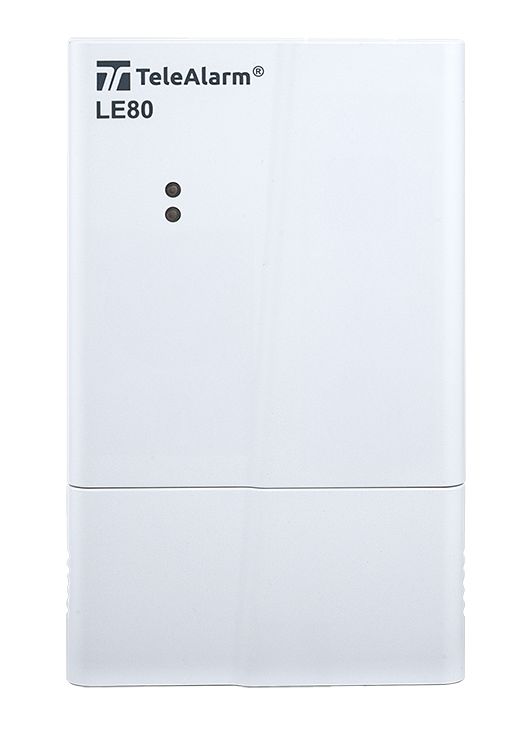
The LE80 Radio Receiver offers high versatility with multiple configurable modes.

The TeleAlarm Nurse Call Main Unit 8 serves as the central hub of a modern, wireless nurse call system engineered to streamline workflows and elevate the standard of care.

The N86 Wall Transmitter is a versatile, multifunctional radio-based alarm device designed to support both patients and nursing staff within modern care environments.

The PR80 Programming Device, together with its dedicated NCCM Software, has been purpose-built to configure, manage, and upgrade wireless TeleAlarm NC8 devices efficiently and reliably.

The LE80 Radio Receiver is a highly adaptable component designed to bridge wireless and wired communication within modern nurse call and alert systems.

The RAC80 Radio Alarm Contact is a compact and reliable monitoring device engineered to detect and report the opening or closing of electrical contacts, doors, or windows equipped with a magnetic switch system.

The B80A wireless wristband transmitter is a specialized device designed exclusively for authorized caregiving staff, combining advanced acknowledgment functionality with intelligent patient accompaniment support.

The B81 Acknowledgment Device is a compact, purpose-built wireless transmitter designed exclusively for authorized care staff. It provides a fast, secure, and intuitive way to acknowledge patient calls directly at the point of care.

The S87L wireless, programmable, multi-mode wristband transmitter with a locator function enables the wearer to call for help at any time at the touch of a button, directly via the wireless nurse call system.
Together, we will develop the best solution for your business. Our sales team is here to provide expert guidance as you evaluate your options and implement the right plan.